
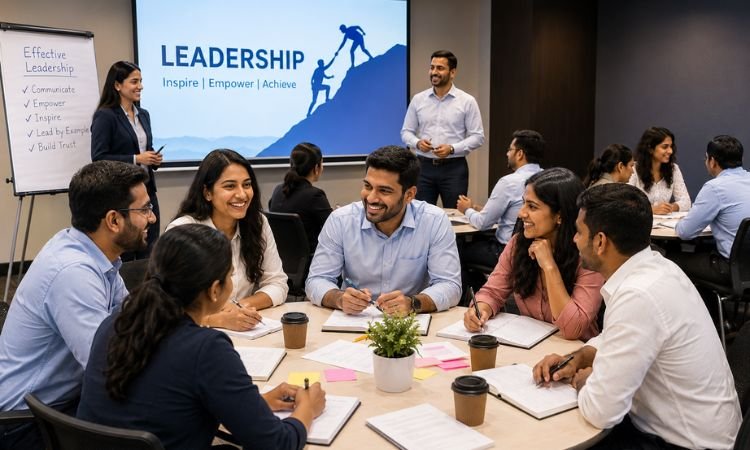
Every organisation eventually hits the same truth: technology, tools, and strategy can only take a business so far. What actually drives performance is people. This is exactly why corporate training programs have become a top priority for companies across India that want to build stronger teams, sharper leaders, and a more engaged workforce.
At Training inCorporate, we work with organisations to design employee development and leadership training interventions that go beyond one-off workshops, creating real, measurable shifts in how teams communicate, collaborate, and perform.
What Makes a Corporate Training Program Effective?
Not all training delivers results. A generic, one-size-fits-all session rarely changes behaviour. Effective corporate training programs are built on three pillars:
- Diagnosis before design: Understanding the actual skill or competency gap through tools like C-Gap Analysis before building the curriculum.
- Behavioural and skill-based learning: A blend of soft-skills coaching, leadership skills development, and functional training tailored to real workplace challenges.
- Sustained engagement – Reinforcement through digital modules, follow-up coaching, and on-ground activities rather than a single-day event.
This is the philosophy behind Training inCorporate learning & development programmes, which combine behavioural training with practical, skill-based workforce development to help organisations build capability that lasts.
Key Areas Corporate Training Should Cover
Modern professional development programs typically span four broad areas:
- Communication skills including presentation skills, assertiveness, and cross-cultural communication for a diverse workforce.
- Leadership and managerial effectiveness, equipping first-time managers and senior leaders alike with decision-making, coaching, and people-management capability.
- People skills and emotional intelligence: conflict resolution, stakeholder management, and team building to strengthen collaboration.
- Innovation and cutting-edge learning: design thinking, creative problem-solving, and experiential formats like outbound team building that make workplace learning memorable.
Organisations that invest across all four areas rather than isolated skill-training see a stronger return in the form of higher retention, better internal mobility, and improved employee engagement.
The Business Case for Investing in Training
Beyond individual skill-building, structured employee training initiatives directly support business outcomes: reduced attrition, faster onboarding, stronger succession pipelines, and measurable productivity improvements. Companies that pair training with consulting support such as L&OD audits and eSat & cSat surveys are also better positioned to track ROI and continuously refine their organisational development strategy.
This data-backed, consulting-led approach is what has helped Training inCorporate. build long-standing partnerships with clients across industries. You can read how these interventions have translated into real business impact on our testimonials page.
FAQs
1. What are corporate training programs?
Corporate training programs are structured learning interventions designed to build employees’ skills, behaviors, and competencies, covering areas like communication, leadership, teamwork, and problem-solving to improve individual and organizational performance.
2. How long does a corporate training program usually take?
Duration varies by objective. Some are short, focused workshops (half-day to two days), while others are ongoing initiatives spread over months, combining live sessions with digital reinforcement like Learning Shots™.
3. How do companies measure the ROI of employee training?
ROI is typically measured through pre- and post-training competency assessments, C-Gap Analysis, employee and customer satisfaction surveys (eSat/cSat), retention rates, and performance improvements over time.
4. What is the difference between training and organisational development (L&D)?
Training focuses on specific skills for individuals or teams, while Learning & Development (L&D) is a broader, strategic function that aligns training, coaching, and consulting to long-term business and talent goals.
5. Can corporate training be customized for different industries?
Yes. Effective training providers first assess an organization’s specific gaps and culture, then design or adapt modules from leadership coaching to team-building to suit that industry’s unique challenges.
Getting Started
Choosing the right corporate training partner matters as much as the content itself. Look for a partner who customises programmes to your industry, measures impact, and offers both in-person and digital formats such as Training inCorporate Learning Shots™ platform for accessible, on-demand modules.
To explore how a tailored training programme could work for your team, learn more about us or get in touch with our team.