
In a business landscape where competitive advantage is increasingly defined by people rather than products, talent development has emerged as the most consequential investment an organisation can make. It is not a cost it is the infrastructure of sustainable growth.

What Is Talent Development and Why Does It Matter Now?
Talent development is the deliberate, ongoing process of strengthening the knowledge, behaviours, and capabilities of individuals within an organisation so they can perform at their best today and grow into greater roles tomorrow. It spans everything from structured classroom learning and digital modules to coaching, mentoring, stretch assignments, and peer-to-peer learning.
At Training inCorporate, we define talent development simply: it is the art and science of making your people better at what they do and more confident about who they are becoming. When done right, it does not just fill skill gaps. It builds organisational resilience, elevates culture, and significantly improves retention.
“The driving force of every successful company is its people. Our purpose is to engage with clients at a strategic level and execute interventions that sharpen the team.”
The urgency around talent development has never been higher. Rapid technological disruption, evolving workforce expectations, and the pressure to do more with leaner teams means organisations that invest in their people are pulling ahead while those that don’t are struggling to retain even their best performers.
The Four Pillars of Effective Talent Development
Effective talent development is not a single programme it is an ecosystem. At TRG Inc., our Learning & Development framework is built around four interconnected pillars:
Behavioural & Intrinsic Skills
Building self-awareness, emotional intelligence, motivation, and personal effectiveness — the invisible competencies that determine how far a person can go.
Communication Mastery
From functional English and listening skills to virtual conferencing and crucial communication — the ability to express, influence, and connect is foundational.
People & Leadership Skills
Coaching, delegation, conflict resolution, managing performance — the repertoire that transforms competent individuals into exceptional leaders.
Cutting-Edge Capabilities
Design thinking, creative problem-solving, storytelling, executive presence — the differentiating skills that set high-performers apart in a crowded market.
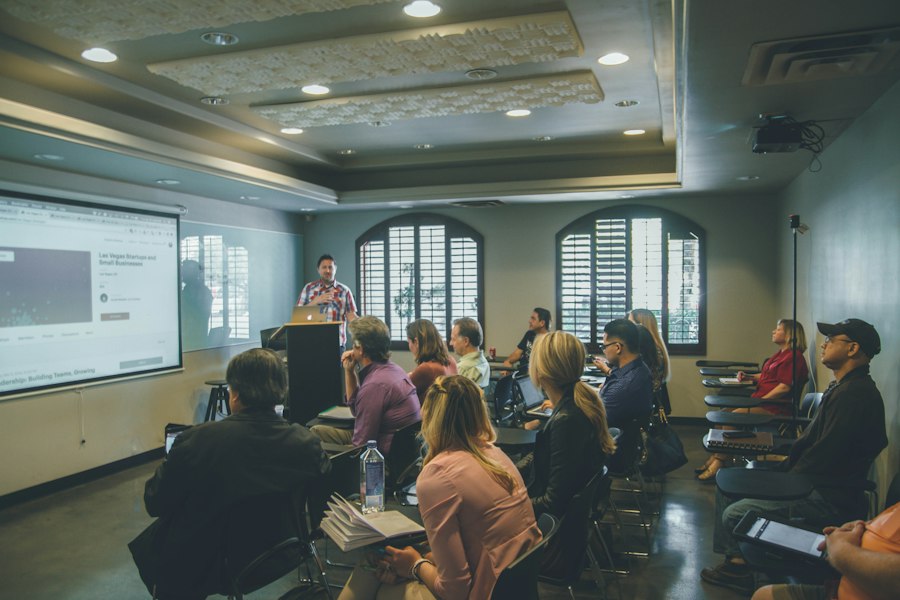
Coaching & Mentoring: The Heartbeat of Talent Development
Of all the interventions available to L&D professionals, structured coaching and mentoring consistently delivers the highest long-term return on development investment. Unlike training events which transfer knowledge coaching transforms behaviour. It works through insight, accountability, and personalised attention.
Mentoring, on the other hand, accelerates growth by providing the benefit of lived experience. When senior leaders invest time in mentoring emerging talent, organisations build institutional knowledge pipelines that are virtually impossible to replicate through any other means. It also sends a powerful cultural signal: that growth is valued and supported at every level.
Through Training inCorporate’s Coaching & Mentoring programmes, participants learn how to ask better questions, give meaningful feedback, hold others accountable with empathy, and build the trust that makes development conversations truly transformative.
Start With a Competency Gap Analysis
One of the most common mistakes organisations make is investing in training before understanding what their people actually need. Generic programmes delivered without diagnosis are expensive, time-consuming, and rarely move the needle. This is why a Competency Gap Analysis (C-Gap) is the essential first step in any serious talent development initiative.
What a C-Gap Analysis Reveals
- The delta between current competency levels and role requirements
- Which behavioural gaps are holding individuals or teams back most
- Where to prioritise L&D investment for maximum organisational impact
- A baseline against which post-training ROI can be measured
- Hidden talent that may be ready for greater responsibility
At Training inCorporate, our C-Gap Analysis process goes beyond simple surveys. We triangulate data from assessments, manager observations, role-specific benchmarks, and business outcomes to produce an actionable L&D roadmap. The result? Training that is targeted, relevant, and measurably effective.
A Critical Investment: Developing First-Time Managers
Organisations consistently underestimate the development needs of their newest managers. The transition from individual contributor to people manager is one of the steepest learning curves a professional will ever face — and without the right support, many stumble.
Research consistently shows that employees don’t leave companies — they leave managers. This makes First-Time Manager development not just an L&D priority, but a retention strategy. Key areas that new managers need to build competence in include:
-
Delegation Without Micromanaging
Learning to trust the team, assign ownership clearly, and resist the urge to take back work when things get tough. Our Delegation programme addresses this directly.
-
Managing Performance Conversations
Giving feedback that is specific, timely, and constructive — without destroying the relationship. See our Managing Performance module for more.
-
Emotional Intelligence in Leadership
Understanding one’s own triggers and reading team dynamics accurately — the foundation of psychological safety. Explore our Emotional Intelligence programme.
-
Conducting Effective Meetings
New managers often inherit poor meeting habits. Our Conducting Effective Meetings programme transforms how teams use shared time.
-
Building Team Cohesion
Learning how to create psychological safety, resolve tension, and celebrate wins in ways that build culture. See how Team Building fits into a manager’s toolkit.
The Training inCorporate Approach: 40:20:40
What separates great talent development from forgettable training is what happens before and after the classroom. TRG Inc.’s proprietary 40:20:40 approach reflects a deep understanding of how adults actually learn and change behaviour.
40% Pre-Work — Setting the context, creating the right mindset, and identifying personal learning goals before any formal session begins. This dramatically increases engagement and retention.
20% Training Intervention — Highly experiential, participative learning events that go far beyond slides and lectures. TRG Inc.’s unique Drama@Work methodology, Outbound Team Building, and digital Learning Shots™ are examples of interventions that create visceral, memorable learning experiences.
40% Post-Work — Reinforcement, application challenges, manager follow-up, and accountability structures that convert learning into sustained behaviour change. Without this, even the best training fades within weeks.
“Talent development is not a one-day event. It is a sustained investment in human potential — and the organisations that treat it as such are the ones that win.”
Digital Learning & Learning Shots™
The modern workforce does not learn in a single mode and neither should your talent development strategy. TRG Inc.’s Learning Shots™ platform delivers bite-sized, high-impact digital modules that employees can access on demand. Whether it is a 15-minute session onTime Management or a deep-dive into Stress Management, digital learning complements in-person programmes by enabling continuous, self-paced development.
Blended learning combining classroom, digital, and social learning has been shown to dramatically improve knowledge retention compared to single-mode training. For organisations with geographically dispersed or hybrid workforces, a digital-first component to talent development is no longer optional.
Measuring the ROI of Talent Development
L&D leaders are under growing pressure to demonstrate the business value of their investment in people. This requires moving beyond attendance records and satisfaction scores toward genuine impact metrics. TRG Inc.’s L&OD Audits and eSat & cSat Surveysprovide structured frameworks for capturing the real impact of development initiatives.
Meaningful measures of talent development ROI include improvements in team engagement and eNPS scores, reduction in voluntary attrition among high-potential employees, measurable increases in managerial effectiveness ratings, higher performance review scores post-intervention, and documented improvements in client satisfaction (cSat) following sales or service training.
Building a Talent Development Culture
The organisations that consistently outperform their peers share a common trait: they have made talent development a cultural value, not just an HR initiative. Learning is embedded in the rhythm of their daily work. Leaders coach. Managers give feedback generously. Teams learn from failure without blame.
Creating this culture requires more than a good training catalogue. It requires senior leadership commitment, structural support through expert consulting, a willingness to diagnose honestly through tools like Competency Gap Analysis, and a long-term investment mindset.
At Training inCorporate, we have spent decades partnering with organisations across India to build precisely this kind of culture one where every individual feels seen, invested in, and equipped to grow. Because when your people grow, your organisation does too.